Understanding over memorizing
Formulas you memorize evaporate after the exam. Ideas you can picture stay. I aim for the second thing, even when it is slower at first.
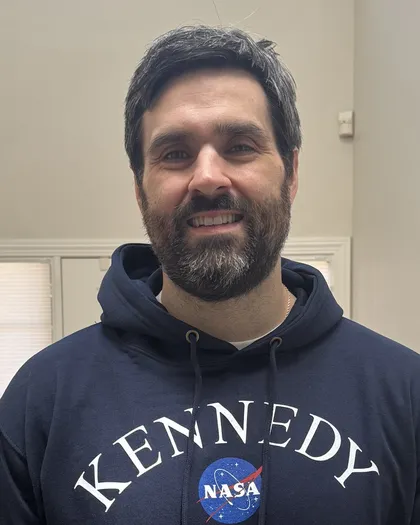
I'm Jack. I have a PhD in chemical engineering from Rensselaer Polytechnic Institute, I'm a licensed Professional Engineer in Oregon, and I have spent fifteen years actually using this material: in research, then at Intel and Lam Research, and now as a data scientist.
I also taught it. Six years as a teaching and research assistant at RPI, and in 2019 I was given the Phillip A. Groll Teaching Assistant Award. Knowing a subject and being able to explain it are genuinely different skills, and I have been assessed on both.
Intuition in a technical subject is not a gift that some students have and others do not. It is what you get when your mental model of the material is accurate enough to reason from.
Someone with that model can rebuild a formula they have forgotten, notice when an answer is off by a factor of a thousand, and handle a problem worded in a way they have never seen before. Someone running on memorized procedures can do none of those things, and it shows the moment a question is unfamiliar.
Building the model is slower at the start. It is also the only part that still works six months later, in the next course that assumes you understood this one.
Formulas you memorize evaporate after the exam. Ideas you can picture stay. I aim for the second thing, even when it is slower at first.
Most trouble in calculus is unresolved algebra. Most trouble in transport is unresolved calculus. Rather than drilling the surface topic, I look for the thing underneath that never got solid.
We use your real problem sets and past exams. The goal is that you can do it alone afterwards, not that you followed along while I did it.
The subjects I tutor are not a list I assembled. They are the coursework behind a PhD in chemical engineering and the work I have done since.